
Science Meets Policy: Shaping a Greener Future
Environmental challenges are complex, interconnected, and global in scale. Addressing them effectively requires more than isolated projects—it requires policies and governance systems that protect ecosystems at a structural level.
Scientific research provides the foundation for understanding environmental change. Ecologists, climate scientists, and conservation biologists study how ecosystems function, how species interact, and how human activities affect natural systems. However, scientific knowledge alone cannot protect the environment unless it is translated into practical policies and actions.
BioHorizon Institute works to bridge this gap between research and decision-making. By collaborating with policymakers, governments, and environmental organizations, the institute helps transform scientific findings into strategies that guide sustainable development.
Research conducted through restoration and conservation projects provides valuable data about ecosystem recovery, species populations, and environmental resilience. These findings inform policy recommendations related to land use, habitat protection, and climate adaptation.



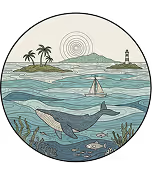

Effective environmental policies create the framework that allows conservation efforts to succeed. Protected areas, wildlife regulations, and sustainable land management plans help ensure that ecosystems remain healthy over the long term.
By integrating science into policy decisions, societies can make informed choices that balance economic development with environmental protection.
It’s time to make an impact & here’s how you can start today!

Nature
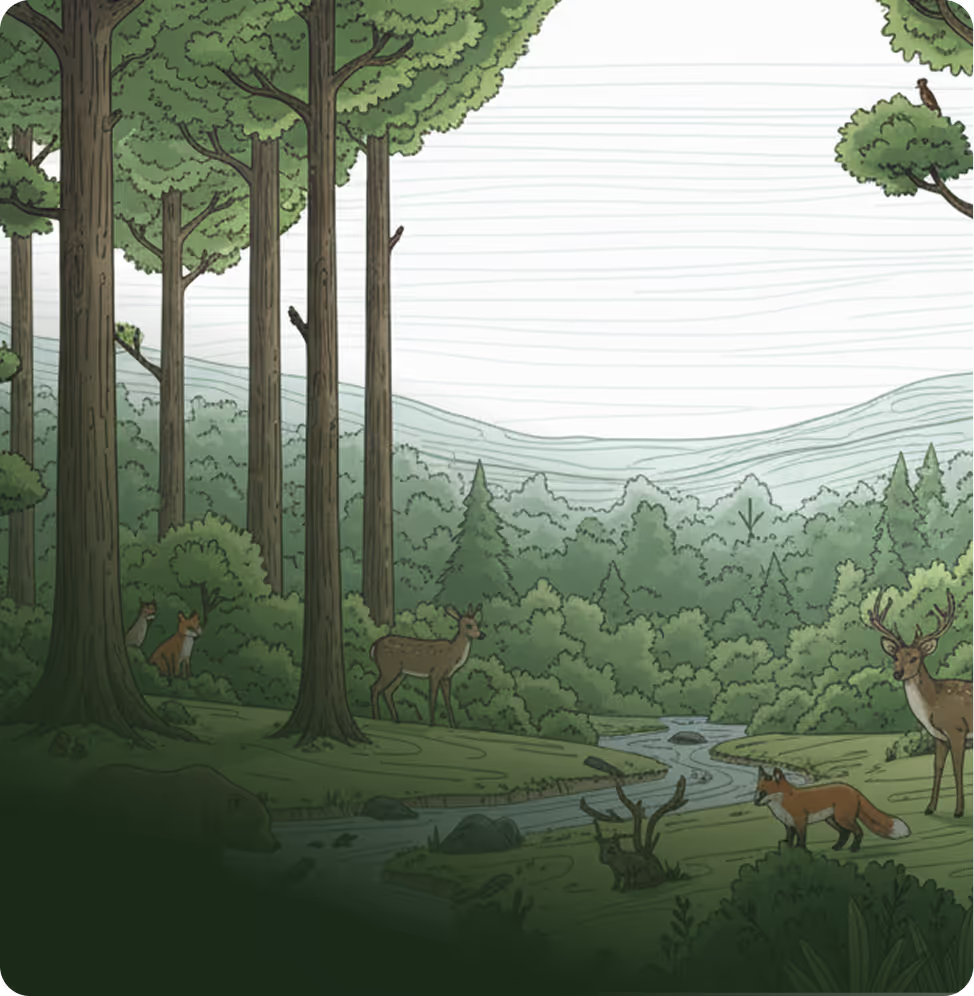
WILDLIFE

SEA ECOSYSTEM
wildlife


